“Uhh, usually I play a sample here, but it’s not playing right now”
“Well this is awkward…”
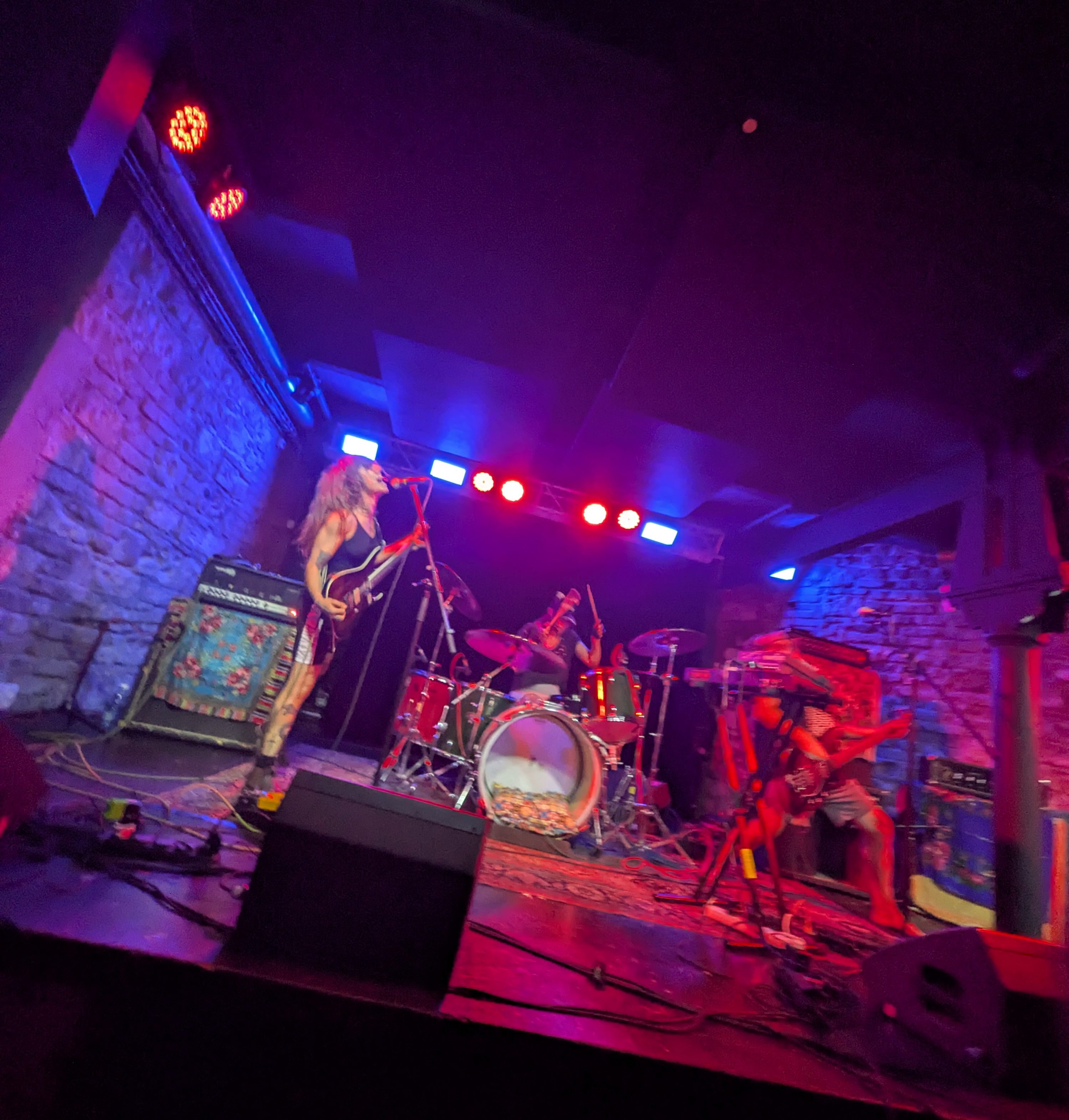
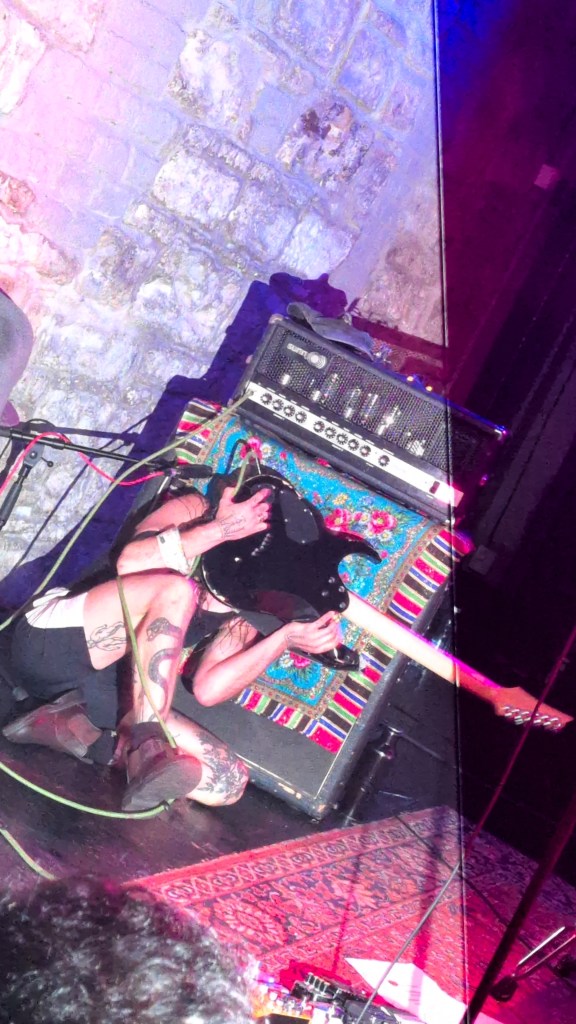
Guitarist and self-described “professional tantrum thrower” Mariam “Maz” Benjemaa shares an onstage laugh with bandmate Reece Prain. They proceed to erupt into a cacophony of noise and rage in the intimate basement space of Subzero Prague. With drummer Scarlett Shred’s thunderous drumming and backing vocals added to the mix, it’s a visceral assault on the senses.
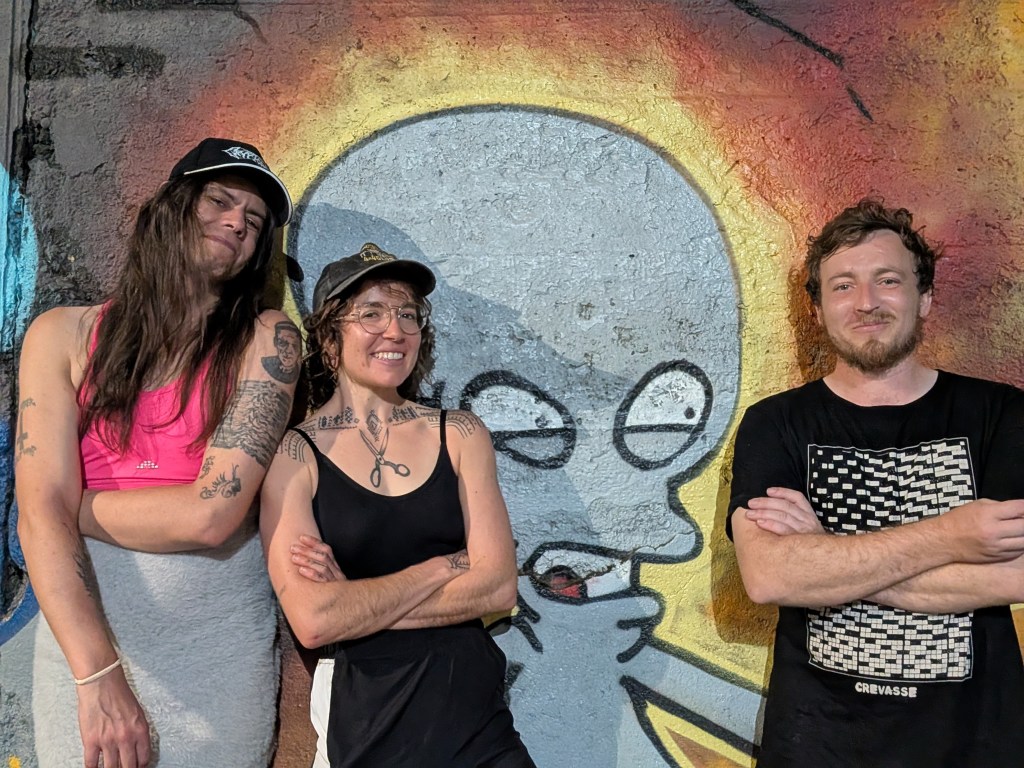
Diploid, the three-piece from Naarm Melbourne, are no strangers to underground venues and European festivals catering to the heavier scene. This recent appearance in Prague was followed up by a slot on the aptly named Obscene Extreme summer festival. Their passion, message and disarmingly charming personalities make them worthy ambassadors for Australia’s heavy music scene.
Hurt people, hurt people.
I am a hurt person, going around hurting people.
Until the day I die.
I don’t fucking care.
– “Mantra”
As an Australian who has lived abroad for more than a decade, I’ve been troubled by this riddle. Australia is widely considered a paradise, surrounded by natural beauty, good weather, and generally happy, laidback people. When Czechs find out I’m Australian, they look at me puzzled and ask, “Why do you live here?”.
What could possibly explain this juxtaposition? If Australia is so idyllic, why are we making some of the best heavy music in the world, headbanging and screaming as such deeply, tormented souls?
Is Australian culture really that chill?
After witnessing Diploid’s whirlwind set, I pose the riddle to them. Scarlett answers with little hesitation:
“It’s chill because it has to be. Otherwise we’d have to actually acknowledge all the fucked up shit that comes from living in a place like Australia.”
It’s a loaded statement, but I can see where Scarlett is coming from. Earlier in the set, she gave a shout-out to the band’s origin from “from So-called Australia…a collection of mobs currently occupied for 150 years”.
and over! Again! Take it!
This seemingly throwaway sentence sets the context in which Diploid operates – an outward expression of inner turmoil that most Australians lack the space or vocabulary to articulate.
“Our songs deal with political themes, but they’re internalised. It really resonates with a demographic that really needs to have that kind of outlet,” reflects Scarlett as we stand/sit in the loading bay after the show.
“Because at the end of the day, nobody in Australia can take anything seriously. It’s that classic ‘larrikin’, ‘she’ll be right’ attitude that can’t be shaken. The number of times I’ve been gaslit about shit…I’d almost rather have people be openly racist or hateful to my face you know?”
Czechs have their own history with political conflict, and in a modern day Europe with a rising right wing, this musical outlet is just as relevant. In this very venue, a group of local neo-Nazi thugs targeted a Labour Day anti-fascist rally, with a member of a German band ending up in hospital. It’s this open version of hate that Scarlett ironically says is almost preferable to the Australian reluctance to engage on topics of Aboriginal history, racism, or transphobia.
As for the music and the noise, she continues, “It’s pure catharsis. These days we get a lot more gender-diverse and queer kids coming out to these shows [compared to ten years ago], which is great. They need something to let it all out, and make a connection with others”
Maz adds, “It’s definitely way different to when we were younger in the Melbourne scene. Hardcore was always male-dominated and bro-ey…which I guess it still can be sometimes. It’s still very white that’s for sure…but yeah, there are a lot more women and LGBT folk in the scene today, which is fantastic”
I see no change.
I’m not sick.
I know what I’m doing.
Speaking with the band, the Australian need for an outlet of aggression such as hardcore music is drawn in sharp relief. Violence against Aboriginals is still perpetuated 200+ years after settlement, trans hate is on the rise, and violence against women is still something of an Australian norm. And despite branding itself as a freedom of expression rally, the March for Australia held on August 31 was replete with all kinds of mixed messages aligning with generic culture war sentiments.
Under this onslaught of national concerns, Australian mental health services are reportedly “buckling” due to unprecedented demands.
It’s no wonder then that marginalised communities find solace in the screams and distorted guitars of the hardcore and noise scene. The disconnect between this internalised turmoil and the external pressure to be laidback and chill leads to an inevitable breaking point. Australians’ infamous nonchalance can only last so long.
For an act like Diploid, who have been playing for more than ten years together, the ebbs and flows of this tension are very real.
Reece weighs in on the discussion, “It’s crazy to think that we are still playing together, all the way out here in the Czech Republic of all places. We know lots of bands back home who called it quits due to life rolling on, family commitments, or COVID hitting us all quite hard for example. But at the end of the day, [as Diploid] we’re all really good friends. I think that’s why we manage to still have fun onstage, despite the chaos.”
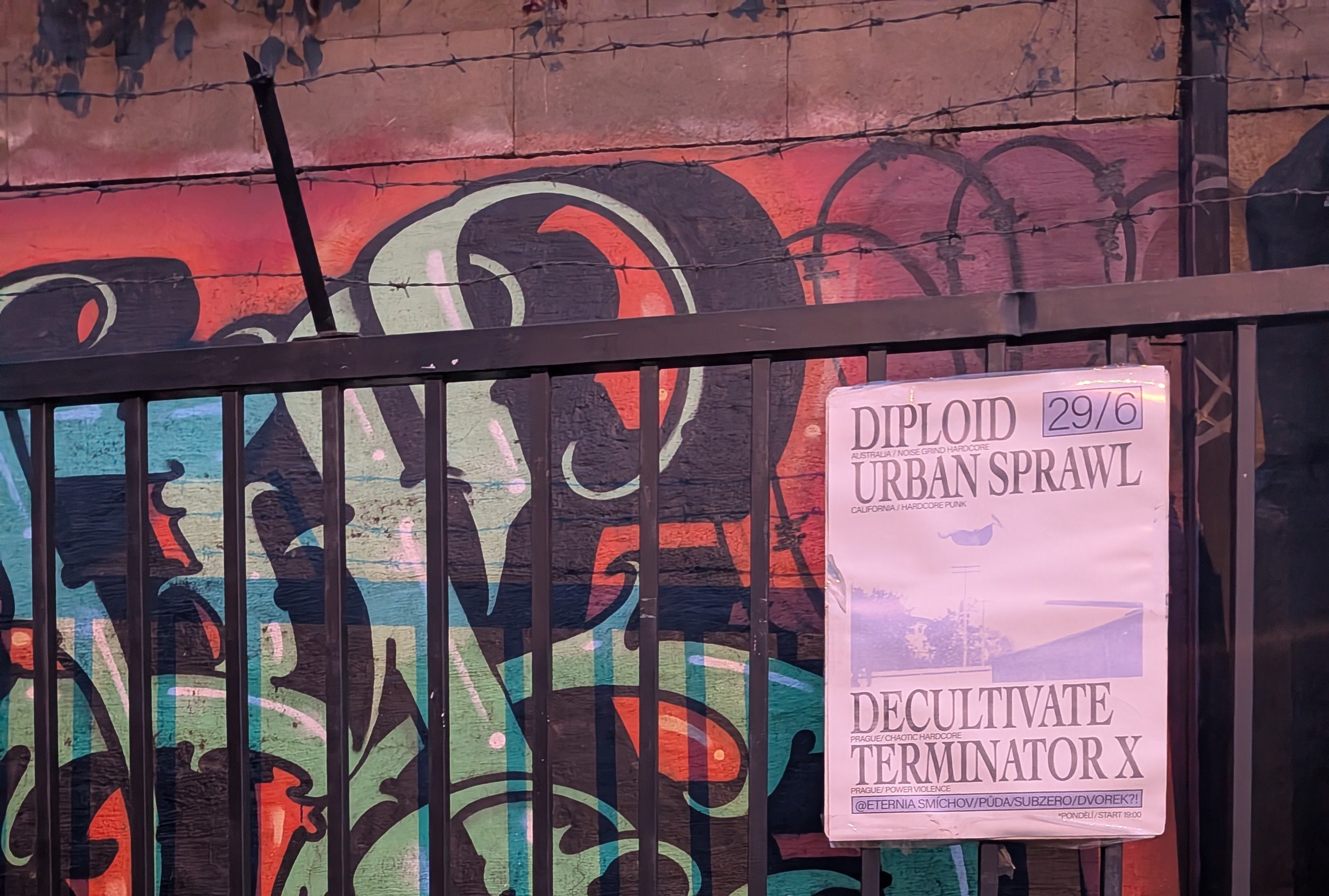
Another slate of Australianisms surfaces: the refusal to take oneself too seriously and that cringeworthy term of ‘mateship’. That is of course another hallmark of the hardcore scene- community. On tonight’s mixed bill, Californian hardcore and Czech emo also made an appearance. Seeing bands mingle with the punters afterwards is always a heartwarming experience.
This ability to build community and share a message of solidarity is what sets a subculture like hardcore apart. It’s how a band from thousands of kilometres away can sit in the loading bay and reconnect with a superfan from Brazil in the middle of Central Eastern Europe. It’s how a gender-diverse act can provide emotional and psychological support for a marginalised community that feels like they will never fit in with their external environment.
This unique brand of Australian chaos and community makes me a little bit extra homesick, but thankful for the Prague hardcore scene as well. After this conversation with Diploid and spending time down under during the European summer break, the contradictions of Australia’s paradise-like reputation and a mental health crisis and battle for national identity are even more evident.
There’s no easy answer to this psychological riddle (believe me, my Czech wife, who is a mental health professional has been puzzling over it for just as long as well). But at the very least, I am thankful that we have champions like Diploid to create a space and outlet for those who need it the most.


Leave a Reply